Townhouse vs Apartment vs Duplex: Which New Build Should You Buy?
A new townhouse may suit you if you want your own entrance and a small courtyard. An apartment may fit if you value a particular location and less private outdoor upkeep. A duplex may offer a house-like layout with just one adjoining home. The best choice depends on the actual floor plan, title, shared responsibilities and total cost.
When weighing a townhouse vs apartment, or looking at a duplex in NZ, separate the building type from the ownership structure. Start with new townhouses on BuyNew, then use the checks below to decide which homes deserve a closer look.
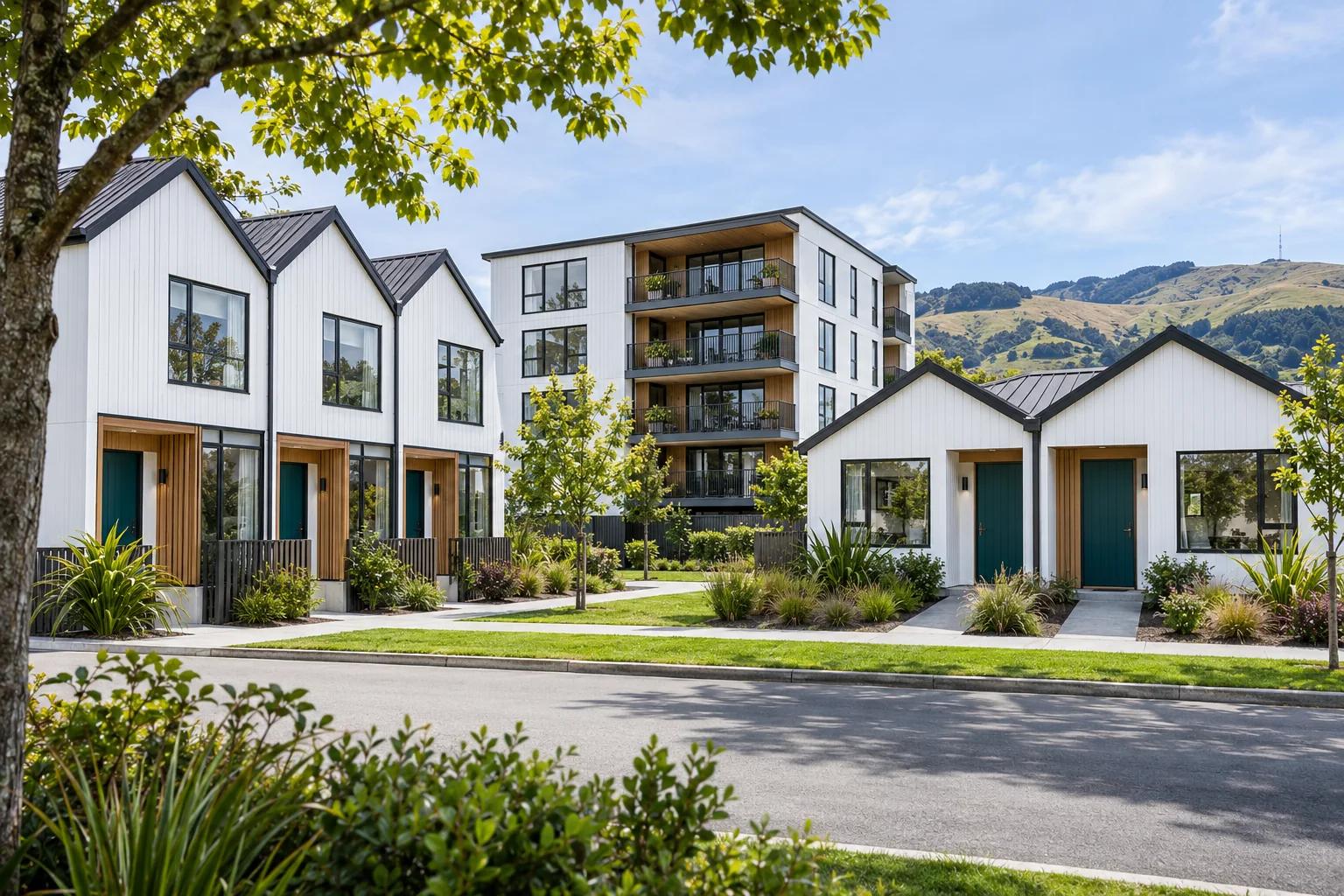
Know the types
Townhouse
A townhouse usually has its own entrance and sits alongside other homes, often sharing one or more walls. Many new townhouses have living space downstairs and bedrooms upstairs, but single-level layouts exist. End homes and middle homes can have different light, access and outdoor space, even within the same development.
Apartment
An apartment is a self-contained home within a building containing other homes, often with neighbours above or below as well as beside it. Access may involve a shared lobby, stairs or a lift. Check the exact apartment, floor, outlook, balcony, storage and route from the street; the building's display suite may have a different layout.
Duplex
In this guide, duplex means a pair of attached homes side by side, sharing a wall. They can be single or multi-storey. Listing terminology varies, so confirm whether the sale is for one home or the whole pair, how the homes are arranged and what outdoor land is included. Two homes in one building do not necessarily have separate legal titles.
These labels describe the physical arrangement. They do not establish who owns the land, whether there is a body corporate or who pays for a roof repair. Settled's property options guidance encourages buyers to weigh location, space, neighbours and ongoing obligations together.
Find your fit
Your daily routine
A townhouse can provide a front door to the street and a courtyard without a large garden. Check whether stairs split the spaces you use most, where guests sleep and whether groceries, a buggy or a bike can get from the parking area to the door easily.
An apartment can work well when its location reduces the trips you make each day. A single-level interior can be useful, but inspect the complete access route: entry steps, lift size, corridors and parking access. Ask how lift breakdowns are managed. A balcony may suit sitting outside while offering little room for gardening or play.
A single-level duplex can suit buyers wanting ground-level living and a garden with fewer adjoining homes than a terrace. Check the layout rather than assuming every duplex offers this. A two-storey duplex still has stairs, and a compact site may leave little outdoor room.
Noise, light and privacy
Ask where bedrooms sit relative to neighbouring living rooms, garages, lifts and shared entrances. For an apartment, consider sound through floors as well as walls. For a townhouse or duplex, look at adjoining rooms, courtyard boundaries and heat pump locations. Ask for the acoustic specification and suitable independent advice; an attached home is not automatically noisy or quiet.
Visit a completed home at different times where possible. Check sunlight in the rooms you will use, overlooking from nearby windows and the effect of planned neighbouring buildings. For an off-plan purchase, use the actual site and floor plans, orientation and surrounding development information. A bright marketing render is not evidence of year-round sun.
Space that works
Measure furniture, storage and circulation. Include laundry drying, bins, bikes, a work desk and visiting family in your walkthrough. Ask whether advertised floor area includes garaging, balconies or other spaces. Check the parking space's legal status and dimensions, visitor parking and any permissions needed for an EV charger.
Check the title
The same building form can have different ownership arrangements. Have your lawyer review the record of title, plan and registered interests before signing. Settled's ownership guidance explains the main structures and their effect on your rights.
- Freehold: ask about covenants, easements and agreements covering shared walls, roofs, driveways, drainage and services. An absence of body corporate levies does not establish that shared costs are zero.
- Unit title: buying a unit makes you a body corporate member. Review the operational rules, insurance, levies, maintenance arrangements and the boundaries of your unit and any accessory units.
- Cross lease: ask your lawyer to explain the lease, plan, exclusive-use areas and consent requirements for alterations.
- Leasehold: understand the ground rent, review terms and remaining lease, and discuss their implications with your lawyer and lender.
For a unit title purchase, the seller must provide a pre-contract disclosure statement before you sign the sale and purchase agreement. Unit Titles Services explains the disclosure requirements, including different information for existing and off-the-plans units.
For an established body corporate, request the available financial statements, meeting records, insurance information and long-term maintenance plan. For a proposed new development, scrutinise the draft budget, proposed rules and service contracts with your lawyer. Estimated first-year levies do not prove future costs. Our body corporate fee guide explains the questions to ask.
Read rules and agreements for anything important to you, including pets, letting, exterior changes, heat pumps and use of shared spaces. Confirm the approval process before assuming you can make a change.
Count the costs
No property type is always the cheapest to buy or own. Build a budget for each real candidate using its asking price, lender terms, rates, insurance, shared charges and maintenance needs. Add transport and parking costs if the location changes your routine.
For an apartment, check which costs the levy covers, how lifts and other shared systems are maintained, and whether major work is funded. For a townhouse or duplex, ask who arranges and pays for shared-wall, roof and access repairs, how decisions are made and how disputes are handled. Avoid counting insurance twice if it is already included in a levy.
A small garden can mean fewer weekend chores, while upper-storey cladding or gutters may need specialist access. Ask for a maintenance schedule and obtain insurance information for the actual title and construction. New materials and shared management do not remove future upkeep.
Confirm that your lender accepts the exact property and its ownership arrangement before committing. General pre-approval is not final approval of every home, as Settled explains in its finance confirmation guidance. Discuss the purchase documents, floor area, levies and any leasehold terms early.
If buying before completion, align the deposit and settlement timetable with your funding. Read our new-build deposit guide and off-plan checklist. Neither a lower purchase price nor a particular home type guarantees capital growth or an easy resale.
Before you enquire
Shortlist against your essential daily needs first. Then ask the supplier for the same evidence for every home you are considering:
- The exact home or unit identifier, asking price, floor plan, site plan and written inclusions.
- The current or proposed title and plans, with parking, storage and outdoor areas identified.
- The agreements governing shared structures, services and access, plus applicable rules and disclosure documents.
- Current rates, insurance arrangements, levies or proposed budgets, and known planned work.
- Construction specifications, acoustic information and access arrangements for maintenance.
- The build stage, expected completion, contract conditions, payment timetable and handover process.
Have your lawyer review the agreement and title, arrange suitable independent inspection, and check council records and natural hazards. Settled's due diligence guidance explains why the title, LIM and property file each matter.
For a completed new build, confirm code compliance certificate status and the scope of the work it covers. For an unfinished home, clarify how sign-off and the handover records will be supplied. MBIE's building sign-off guidance explains that a CCC confirms consented building work complies with the building consent. It does not choose the most suitable home for you.
If the evidence still leaves a material question unanswered, resolve it before signing. The most useful choice is the home whose day-to-day fit and obligations you understand and can comfortably afford.
FAQ
What is the difference between a townhouse and an apartment?
A townhouse usually has its own external entrance and sits alongside other homes. An apartment sits within a shared building and may have homes above or below it. Check the actual arrangement, title and shared responsibilities.
Is a duplex the same as a townhouse?
The labels can overlap. Duplex commonly describes two attached homes, while townhouse can describe a home in a longer row. Confirm the floor plan, what is being sold and whether it has a separate title.
Do all three have body corporate fees?
No. The legal ownership structure determines whether there is a body corporate. Freehold homes can still have shared maintenance obligations. Request the title and agreements rather than relying on the listing label.
Which new build should a first-home buyer choose?
Choose around your sustainable budget, location, layout and willingness to share costs and decisions. Check stairs, access, sound, parking and usable outdoor space. No home type is the best fit for every buyer.